Fearnan 500 BC

To the casual observer, Fearnan might appear to be a relatively recent settlement. There are a few older croft properties, but most of the houses in the present-day village were built within the last 50 years.

However, closer examination reveals signs of habitation around the village from as long ago as the Bronze Age (the Boar Stone), from the early Christian era (a grave stone in the burial ground and the font from St Kieran’s church), and from the late medieval period (the Market Cross).

But perhaps the most famous and revealing monuments are physically out of sight – they are the 2 Iron Age crannogs, which lie beneath the waters of the loch, just off-shore from the present-day village. These are the remains of artificial-island dwellings, built and inhabited by a farming community some two and a half thousand years ago.

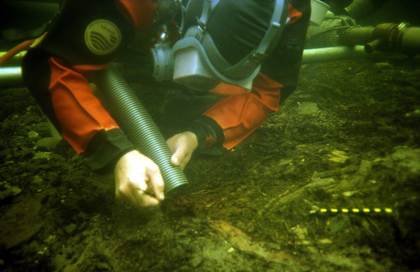
In the 1980’s, one of these crannogs, Oakbank, was the first underwater site in Britain to be excavated and to do this, new archaeological methods had to be developed for both excavating and recording the findings.
img_1998

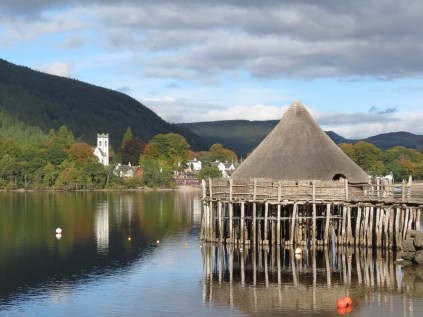
Scottish Crannog Centre, Croft-na-Caber

The excavation has hugely informed the understanding of our Iron Age ancestors, and of life in the Iron Age.

Not only that – it has led to the reconstruction of a crannog, based on the one at Oakbank, on the Loch at Croft-na-Caber.  This makes it possible to imagine how Fearnan might have looked 2,500 years ago.

The landscape is not thought to have changed a great deal in the intervening period so, take away the houses in your mind’s eye, and imagine 2 crannogs – one at Oakbank and one just off-shore at Shoreside; you might see smoke seeping through the roofs from the hearths inside the crannogs; you might hear young children playing and see the older children and adults from the extended family watching over grazing animals and tending their crops.

It is the cultivation of the land  that creates a direct link between the iron age farmers and Fearnan today, because the present day crofts and houses sit on the same land that was farmed by them 2,500 years ago – and by countless generations both before and since the crannog-dwellers. Once cleared, probably about 3,000 years ago,  the fertile land was far too valuable an asset to be abandoned and it has been under continuous cultivation ever since.

Written information about the crannogs starts as far back as 1590.  Timothy Pont’s Map of Loch Tay (of which there is a copy in the village hall) refers to “Krannichs”, and the old tradition spoke of 24 artificial islands in the loch.  In 1938, William Gillies in his book In Famed Breadalbane, gave the position of 13 of these islands and expressed the opinion that more could be identified by a careful survey.

Forty years later, in 1979, that survey was carried out by Dr Nick Dixon, who is now a Director and founder member of the Scottish Trust for Underwater Archaeology, but at that time he was conducting research at St Andrews University. He identified the remains of 18 crannog sites, all in an excellent state of preservation due to the cold peaty waters of the Loch.

Oakbank Crannog was selected for excavation because of its shape, size and the fact that there were the remains of a walkway from the shore to the crannog.  This suggested that, of all the crannogs in the loch, it was most likely to yield interesting information.  Today, Nick smiles at this memory, and remarks that if he had known just how much was down there, he might have picked the simplest crannog in the loch instead!
img_2090

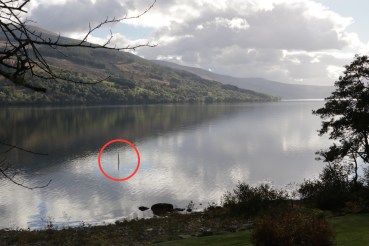
Alder post marking Oakbank Crannog

A single post of alder wood in the water marks the spot where Oakwood Crannog stood.  This was put in some 20 years ago, when Nick and his colleagues were experimenting with construction methods ahead of starting the building at Croft-na-Caber.  The post was cut to a point and driven into the lochbed. Its continuing presence demonstrates how well the lochbed clays grip and hold structures.

In his book, William Gillies talked of the difficulty of constructing these substantial structures in the Loch. The excavation at Oakbank enabled the archaeologists to determine just how substantial they were. The floor was constructed of three levels of small alder trees lying parallel on top of each other. Around the floor were the upright stakes and piles that supported the walls and roof of the house. Forty elm and oak stumps mark the remains of a walkway that led to the shore.

The archaeologists have found evidence that Oakbank Crannog was rebuilt some 6 times, following the collapse of all or part of the main structure.  Each collapse would have added to the growing mound of debris under the crannog, and latterly the support piles that needed to be sunk into the loch would have been driven into the old debris, rather than the lochbed clay. This would have produced a less stable result, and so large stones and rocks were dropped to help hold the piles in place.  Over time, a small man-made island would be built up under the crannog.
Unknown

Diver working at Oakbank (photo courtesy of N Dixon)

What is extraordinary is the wealth of information and the sheer volume of artefacts that have been unearthed from what appears to be a mound of stones. Under these stones is a mass of well-preserved organic debris from the crannog’s platform and the dwelling it supported, along with the abandoned material left by the inhabitants.  Loch Tay’s waters are dark, peaty and cold and this helps with the preservation of materials. But perhaps the best preserver was the mound of bracken and ferns with which the crannog-dwellers covered their floor to make the building comfortable.

Bracken is full of tannins that have a preserving effect and amongst the bracken and ferns the underwater archaeologists found many of the objects that people had used in their everyday lives. Wooden plates and dishes, the remains of a wooden drinking cup, a wooden spoon, and a butter dish with the remains of butter still sticking to it, have all been uncovered. The discovery of cultivation implements provided evidence of agricultural practice, along with the presence of an early form of wheat.  The wheat was unexpected as it had not been thought to be present this far north until some 500 years later.

Animal bones, and sheep droppings with parasite eggs still preserved in them have been found, as well as a fragment of fine textile not suspected from this early date in Scotland.

We now know that their diet included strawberry, blackberry and cloudberry (which only grows on the high moorland above 700m) so the crannog dwellers must have made special trips to collect it. Or perhaps, like the generations of farmers that followed them, they took their sheep up to exploit the higher pastures in summer. Herbs and medicinal plants were also found, and if you have been struggling to eradicate any of these pretty things from your garden…….

…………. you may (or possibly, may not) be interested to know that they have been growing in the area for at least 2,500 years!  But then they would have been prized for their medicinal benefits.  Fat Hen (chenopodium), so called because it was used to fatten poultry, was used for liver complaints, as a mild laxative, for skin irritations, and for relieving arthritis and rheumatism.  Plantain (plantago), apart from being nutritious, has been widely used in poultices and lotions, and has anti-inflammatory effects. It is also rich in tannin and allantoin, both of which help injuries to heal. The uses of buttercups (Ranunculus) include treating headaches and, shingles, and sciatica.
Unknown-1

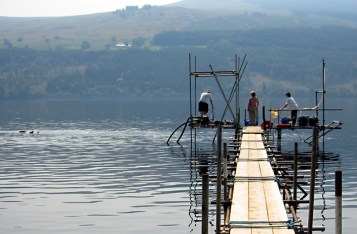
Support platform for underwater excavation of Oakbank Crannog. (Photo courtesy of N Dixon)

The discoveries at Oakbank have not just revealed a wealth of information on how the crannog-dwellers lived as a community, but also on how that community interacted with the outside world. Some of the artefacts found did not originate in the area around Loch Tay – or even in Britain, for that matter. Opium poppy seeds found here, but originating in Afghanistan, must have been traded. A black jet bead, possibly from Whitby, must have been acquired through a trading arrangement. And an iron knife, which would have been a prize possession, must also have been acquired from outside the area. The River Tay provided a trading route and had the potential to connect the crannog-dwellers to traders not just from other parts of Britain, but also from the Continent and beyond. Paddles discovered in the remains of Oakbank Crannog confirm that the water was used as a transport route.

But why were the crannogs built? Were they for defence, or purely practical? There are several possible answers to this. One theory is that it was for security, as the crannog provided a defensible site and a means of keeping their animals safe from on-shore predators. However, it is also clear that the structures would have been highly visible for miles away from the hill tops. Not ideal from the security point of view.

Another possible clue is that at the end of the Bronze Age, which spanned the second millennium BC, there was serious change in the climate and the weather became colder and wetter. This resulted in pressure on the land and resources and led to the construction of different types of structures during the Iron Age such as hillforts, duns and monumental roundhouses.

This is also the period in which crannogs were built. Land that had been laboriously cleared and then cultivated would have become highly valuable for sustaining the community and there was a logic to moving dwelling houses offshore to maximise the space on which crops could be grown and animals grazed.

The fact that these dwellings could have been seen from afar, combined with obvious status symbols that were found during the excavation (for example a bronze swan-necked dress pin dating from 5 – 600 BC), suggests another reason for their construction. The people who occupied the crannogs were relatively wealthy people and so prestige and status may have been behind their construction.

We may never know the definitive answer – but we do know that the Loch holds other tantalising secrets.

One of them is a 12.5 metre log boat that lies on the bottom of the Loch.  It dates from around 1,500 BC and therefore sunk to the bottom in an accident some 1,000 years before the crannogs were built. Its significant size suggests that it was used for carrying cargo as well as people.

Discovered in 1994, it has been left in place on the lochbed, where it continues to be preserved by the cold, peaty waters, until technological advances reduce the cost of raising and preserving it on dry land.

Another extraordinary discovery was a submerged Neolithic woodland deep in the Loch. In a 160m strip on the loch bed, divers found well-preserved oak and elm timbers – some fallen, some still upright and protruding from the lochbed.  Samples taken indicate the trees are between 8,000 and 1,500 years old and it is thought that this underwater woodland represents the old natural shoreline of the Loch, which would have been some 10 – 15 metres from the current shoreline.

In amongst the submerged woodland, divers also discovered the preserved remains of a 4,000-year-old beavers’ lodge – a somewhat topical find suggesting that beavers can perhaps claim a historical right to be in this area!

This year, the 20th anniversary of the reconstruction of the crannog at Croft-na-Caber, the underwater archaeologists are to return to Oakbank for further excavation work. No doubt more detailed information about iron-age life, concealed and preserved for 2,500 years by the waters of the Loch, will be revealed.

In the meantime, The Scottish Crannog Centre, where more information about the  Oakbank excavation can be obtained, re-opens for the season on 1st April 2017.

(Many thanks to Dr Nick Dixon for his time and help in putting this article together.)
Posted in Uncategorized | 2 Comments

Fearnan Pudding Night 2017

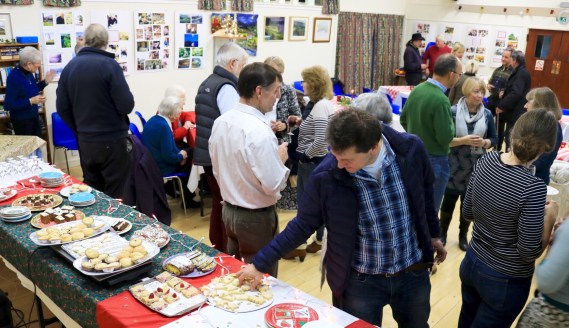
Last Saturday, the annual Fearnan Winter Pudding Night arrived, bringing with it a wonderful smell of baking and a feast of deliciousness for FVA members and their guests.

Whether your preference is for warm ‘comfort’ puddings like Treacle Sponge, Rice Pudding or Cloutie Dumpling, or more sophisticated tarts, pavlovas and cheesecakes, there was something for everyone.

img_2549-3

The main problem was deciding what to choose and what to leave out, but we know of at least one person who solved this tricky dilemma by simply working his way, one by one, down the full list of puddings set out in the menu.  We take our metaphorical hat off in admiration!


As ever, the music was provided by Doug and Hilary Law who, we’re delighted to say, have moved into the village.  Here’s a little sample from Doug.

Take it away, Maestro………


There’s lots more happening in Fearnan, and the dates of forthcoming events are:

Saturday 4th March – Games and Curry Night in the Hall at 6 – 9 pm.

Tuesday 21st March – FVA Coffee Morning.  Join us at 10.30 am for coffee, chat and some delicious home baking.

Saturday 25th March – FVA Annual General Meeting in the Hall at 4pm.

Saturday 22nd April –  Quiz Night in the Hall. The cost will be £7.50 a head for adults and this year’s charity is the Scottish Charity Air Ambulance.

And finally ……..

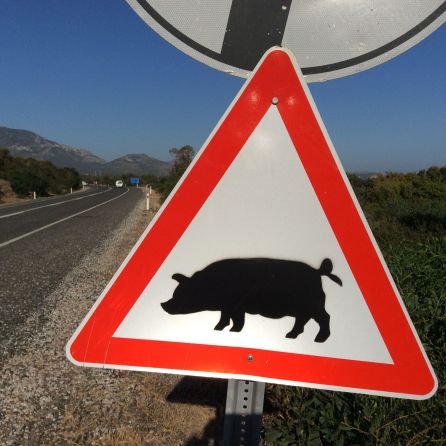
In these parts, we’re familiar with road signs that exhort us to beware of Red Squirrels, Deer, or other wildlife. With it’s tongue very firmly in its cheek, The Blog has another suggestion borrowed from elsewhere!

63ee2d31-1b5d-474a-a1df-3b7c3b5685de

Posted in Uncategorized | Leave a comment

FVA SOCIAL EVENTS 2017

Here’s a list of the main Fearnan Village Association events for 2017. As well as publishing them here, we’ve put them on the What’s On page on the Blog, so they are easy to find at any time.

Winter Pudding Night: Saturday 18th February at 6pm

The perfect antidote to wintry weather! A convivial evening with the best choice of puddings you will find anywhere, ever! Whether you prefer childhood favourites like treacle pudding, jam roly-poly and rice pudding, or more sophisticated tarts, dessert and confections, there’s something here for everyone. You can have as many helpings as you can manage for only £7.00, school-age children half price. Live music. Come hungry!

Coffee Mornings –  Join us for freshly brewed coffee and tea and some delicious home baking from 10.30am to 12.00 on the following dates:

Tuesday 21st March

Tuesday 25th April

Tuesday 23rd May

Tuesday 20th June

Tuesday 12th September

Tuesday 17th October

Other Events:

Saturday 15th April (Easter Weekend). This year the FVA is 10 years old, and like every ten year old, we love a good Birthday Party! Join us at 3pm for a celebratory afternoon tea. Free to members and their friends.

Saturday 15th July: Strawberry TeaZ 15.00 -16.30. Cakes, tarts, scones, ice cream and more – all made or served with strawberries. Live music.

Sunday Nov 12thRemembrance Sunday 11.00 at the Memorial and after in the village hall for tea and coffee.

Saturday 2nd DecMulled Wine & Mince Pies 15.00 – 17.00. Come and enjoy some seasonal goodies and good company.

REGULAR CLASSES AND CLUBS

In addition to the above, there’s a regular programme of events in the village hall. New members and visitors will be welcomed.

Mondays                              

If you’re feeling creative, the Fearnan Art Club meets weekly in the hall on a Monday from 1pm – 3pm (2 – 4pm in the summer). Contact Cath on littleriver7@btinternet.com Art Club meetings start again on Monday 6th February, after a break for Christmas.

And on Monday evenings there’s an open invitation to everyone to come and play Carpet Bowls from 8 – 10pm. Contact Angela on 830619, or at a.kininmonth@talk21.com if you would like more information.

Wednesdays

The Fearnan Book Club meets monthly on Wednesdays at 7.30pm to discuss their latest good read. Contact Graham on graham_liney@icloud.com or on 830727.

The next meeting is on Wed 15th Feb, and the book being discussed is Nutshell by Ian McEwen – a tale of murder and deceit told from the perspective of a baby still in the womb. This will be an interesting discussion!

Fridays

Music and Movement Classes take place in the hall at 10.30am on Fridays. The cost is £2.00pp.


Posted in Uncategorized | Leave a comment

January Community Council Meeting

Members of the local Fearnan community have expressed considerable concern about the increasing amounts of scrap and old vehicles that are being left in the village and around the wider area. There have also been complaints about problems caused by animals.

This subject will be on the agenda of the next meeting of the Glen Lyon and Loch Tay Community Council on 26th January 2017 at 7.30pm in the McLean Hall, Fearnan. The week before the CC meeting, Councillor Ian Campbell will be chairing a meeting of the agencies that have been working to address these problems with a view to finding a more robust, combined approach. There has been recent involvement by SEPA, Perth & Kinross Council Enforcement, PKC Animal Welfare, PKC Roads, and Police Scotland.

Members of the community are welcome to attend for part or all of the meeting, and a copy of the Community Council agenda appears below:

Glen Lyon & Loch Tay

Community Council Agenda for 26th January 2017

 in the McLean Hall, Fearnan at 7.30pm

  • Apologies
  • Minutes of previous meeting
  • Police Report
  • Tomdarroch/Culderbeg Monitoring
  • Roads: A827 lay-by Fearnan/Hill road signs/HGVs and Glen Lyon Pass – traffic lights?/Dalchiaran culvert
  • Phone boxes – Glen Lyon/Ben Lawers/Fortingall
  • Health & Safety – defibrillators
  • Fearnan War Memorial
  • Robert Campbell Cairn
  • Broadband – AB Internet/Lyon Internet/HPCP
  • Planning : On line survey/Weekly/Decision Lists/Recent apps
  • Finance:Travel expenses
  • Hall bookings
  • Correspondence received: Nominations for Royal Garden Party/Nominations for Scottish Civic Trust awards/Planning training for CCs May/June 2017/Low Carbon and Environmental Energy Assessment Workshop
  • AOCB
  • Next meeting – The Molteno Hall, Fortingall. March 9th. at 7.30p.m


Posted in Uncategorized | Leave a comment

Happy New Year 2017!

The year 2017 was ushered in in style with a Hogmanay Party in the village hall.  A large contingent of visitors from Shoreside joined local residents to celebrate the new year – and some of the children in the group experienced not only their first Scottish new year, but also their first steps in country dancing.

As you can see from the photos below, the party had all the ingredients you might expect on Hogmanay – some dancing, a little bit of tartan, a wee tot, a stovie supper and lots of folk enjoying themselves.

And a Happy New Year to everyone who reads this blog, especially those who live far from Fearnan but still check-in on a regular basis to see what we’re up to.  We have regular readers in Canada, America, New Zealand, Australia, Russia and, of course, in other parts of the UK.  This year, some Russian school children were using our blog as a resource in their English language lessons.  We love to know that you’re out there – and we really love hearing from you!

Meanwhile back in Fearnan, the Book Club is going from strength to strength and at the last  meeting, (a Christmas meal in the Townhouse, Aberfeldy) the members voted for their favourite book of those read in 2016. It was His Bloody Project by  Graeme McRae Burnet, closely followed by A God in Ruins by Kate Atkinson and The Testament of Gideon Mack by James Robertson. (Sounds like some good recommendations there for non-members looking for a good read.)

The next meeting is on Thurs 19th January at 7.30 and the book they will be discussing is Kitchens of the Great Midwest by J Ryan Stradal.

If your waistband seems a little tighter after all the seasonal temptations, or you just feel like a good stretch and workout, the Music and Movement sessions continue in the Hall at 10.30 am on Fridays, cost £2.00pp. And, of course, there’s Carpet Bowls, the Art Club or the Walking Group to join.

Good news for the sweet-toothed and pudding lovers among us!  The celebrated FVA Pudding Night is fast approaching.  It will be held on Saturday 18th February at 6.30pm in the Hall and we look forward to seeing you there.

Posted in Uncategorized | 1 Comment

Christmas is coming……….

Last Saturday, the wine was mulled and the pies were minced in preparation for one of the early fixtures in the Fearnan Christmas calendar- our annual Mulled Wine and Mince Pies celebration. This year, it was well attended and it was nice to see old friends and some new faces.

img_2306

As you can see from the photos, the ‘mince pie’ side of things seems to have grown over the years and now includes shortbread, stollen, gingerbread, Christmas muffins and more.

If you feel a little exercise might be on the cards before Christmas, the last Music and Movement session of 2016 will be held in the Hall at 10.30 am on Friday 16th December, cost £2.00pp. Classes will resume in the new year on Friday 6th January, just in time to help fulfill all those new year resolutions.

Talking of the New Year, there will be a Hogmanay Party again this year, starting at 10pm in the Hall and finishing at approx 1am.  There will be ceilidh dancing and a light supper just after the Bells, with a dram at midnight too, otherwise BYOB!  It’s helpful to know numbers for the catering so, if you plan to come, please let Elaine know on 830682.

The first big event of 2017 will be the world-famous Fearnan Pudding Night, taking place on Saturday 18th February. We can promise well over 30 different puddings – steamed or baked, hot or cold, refined or rustic, the choice is yours.  It’s the night when diets are forgotten and no-one counts the number of refills you have – so join us for the ultimate indulgence!


Posted in Uncategorized | Leave a comment

November Update

A short Service of Remembrance was held at the Fearnan War Memorial on Sunday 13th November. The service was led by Shirley Shearer, who is an elder at Kenmore Church, and the wreaths were laid by Ewan Weir and Alastair Grier.

After the service, the Village Association served coffee and home baking in the Hall.

The Book Club

The Book Club continues to thrive.  At the last session there was a robust discussion about  His Bloody Project, by Graeme Macrae Burnet.  The book, which reached the Man Booker Prize Shortlist, prompted a range of different feelings and opinions on the characters and events, and the length of the sustained discussion indicated how involved and engaged everyone had been with this book.

This month’s book is Rise by Karen Campbell. It is set in an ancient landscape in Kilmacarra, a fictional village in the Highlands of Scotland, and is a novel about faith, freedom and finding your place in the world.  However, the book may (or may not) be discussed at this month’s meeting, which takes the form of a Christmas meal for members at the Townhouse in Aberfeldy on the 14th December.

Other books selected for future meetings are:
Kitchens of the Great Midwest by J. Ryan Stradel.
Nutshell by Ian McEwen
These Foolish Things by Deborah Moggach

The date of the next meeting and the order of reading the books are to be confirmed as the Club are keen to maximise attendance by not clashing with other club/society meetings.

Cow Park

Sadly, the Cow Park owners have decided to withdraw the current offer of sale to the community.  Many thanks to all who have contributed time and effort and especially the members of the Steering Group for their research and information-gathering to date.

Mulled Wine and Mince Pies

Christmas is rapidly approaching and the FVA’s annual Mulled Wine and Mince Pies event will take place in the Hall on Saturday 3rd December between 15.00 and 17.00.  The cost is £5 pp and a donation to the Village Hall funds will be made from the takings at the door.

images-1


Join us for an early taste of Christmas, before the seasonal stress sets in! Everyone is welcome and we hope to see you there!

Posted in Uncategorized | Leave a comment

Remembrance Day and Cow Park Update

There will be a short Service of Remembrance, to which everyone is invited, at the War Memorial on Sunday 13th November at 11.00. If you would like a lift down the Brae, please come to the Hall car park by 10.50 (there will also be the chance of a lift back UP the Brae afterwards!)

logo-transparent-1The Village Association will be serving tea, coffee, and home made biscuits in the Hall afterwards, and we hope you will be able to join us. There will be a collection for Help for Heroes.


Cow Park Steering Group

At the village meeting on the 8th October to discuss the possibility of a community purchase of the Cow Park, it was agreed by a substantial majority of those present that a Steering Group should be set up to examine the proposal in detail. The Group – Joe Watson, Aileen Howson, Keith Brockie, Linda Milne, Ros Grant and Tim Wheeldon – had its first meeting on Saturday 29th October.

Joe Watson writes:

In a pre-meeting, Sue and Fiona briefed us in more detail about the research carried out to date and reiterated the remit of the Group, established at the 8th October Meeting. This being:

To research the Feasibility of the proposal, identify and assess the associated risks and produce a Plan so that the Community can take an informed decision about the possibility of purchasing the Cow Park.

After discussion, it was agreed that the Plan should include:

  • The identification, and likelihood, of possible funding opportunities from the various Agencies already identified, and any others;
  • The identification and quantification of the work and management initially required to meet the requirements of SNH in relation to the status of the Cow Park as a Site of Special Scientific Interest ;
  • The identification and quantification of the work and the on-going management needed, once the SNH requirements have been met, to maintain these requirements in the short to medium term;
  • The options for the legal entity that could be set in place for the purchase and ongoing maintenance of the Cow Park.

The initial steps the Group will be taking are:

  • To meet with Claire Martin from Highlands and Islands Enterprise, on the 10th November, at the Cow Park, to discuss funding options and other possible assistance;
  • To meet with Peter McPhail from SNH in the next few weeks, to discuss funding options and other possible assistance;
  • To meet with the consultant who is in the process of preparing a Management Plan for the Cow Park for SNH in the next few weeks, to discuss how the plan is progressing and arrange for him to meet with the rest of the Group to explain in more detail his proposals;
  • To meet the Owners of Borland Farm, to discuss the principles and means of safe and effective bracken removal;
  • To meet with the Owners of Letterellen to ascertain the extent of their boundaries adjacent to the Cow Park and to endeavour to ascertain the ownership of the land between the Cow Park and Letterellen.
  • To review, in so far as this is possible, the previous legal Agreements and Rulings in relation to the Cow Park.
  • To arrange a meeting with the Group behind the work done at Dun Coillich, near Coshieville, so that we may learn from their experience.

There is obviously a lot of work to be done but also a great deal of enthusiasm. The Group has arranged to meet again to assess progress on the 26th November.(ends)

Diary Dates

Apart from the Remembrance Day Service on the 13th, the next date for your diary is the Mulled Wine and Mince Pies gathering on Saturday 3rd December, from  3 – 5 pm in the Hall.

Posted in Uncategorized | Tagged | Leave a comment

A Coffee Morning, The Cow Park and a Chance to Keep Fit!

The October Coffee Morning is always the last one of the year (other things happen in November and December) and it was good to see so many people turning out on a damp and drizzly morning.  We were joined half way through by the Walking Group, who were somewhat wet and ready for a nice hot mug of coffee along with some tasty goodies from the table.

There was a great turn-out and, along with the regulars, there were some first-timers, which is always good to see.

Next month, we’ll be serving coffee in the hall after the Remembrance Day Service (see below for details).

Cow Park Update

As widely promoted, a meeting took place on the 8th October to discuss the offer from the current owner to sell the Cow Park to the village community. Thirty people attended the meeting, and a number of others who were unable to attend had responded by email. There was a very constructive discussion of the pros and cons of the proposal, of the research that has been carried out so far, and of both the short and long term implications of community ownership of this significant piece of land.

There was a majority in favour of looking further into the issues and it was agreed that a Steering Group would be formed to develop a more detailed Plan, so that an informed decision could be taken by the community.

The Steering Group will: follow up the opportunities for grant funding and the offers of support from various agencies that have already been identified in order to quantify them more exactly; identify and assess the risks that might be associated with a purchase; decide the most appropriate legal structure (eg a Trust or a Community Interest Company) and develop a plan that covers what needs to be done to both acquire the land and manage it in the medium to long term.

A number of people volunteered for the Steering Group either at the meeting or afterwards.  Sue Gardener will circulate an update about the meeting and Steering Group  to all properties in the village, either by email or hard copy.

Keep Fit this Winter!

Fran Gillespie has been in touch to tell us that a qualified instructor from LIveActive Leisure Ltd, Perth will be holding weekly one-hour exercise classes in the Molteno Hall, Fortingall, on Tuesdays at 10.00 am, starting on Tuesday November 1st and continuing through until Easter, with a break of course at Christmas.

LiveActive can offer aerobics, stretch and tone yoga-type classes or pilates. It’s up to participants to decide what they’d prefer, so come along on Tuesday November 1st for a FREE one-hour ‘taster session’ of chair-based exercises, stretching and strength. We will then discuss what type of exercises we’d like the classes to continue with. The charge per class will be £4.50 per session and a minimum of 8 weekly participants is required for the classes to be viable.

If you miss the ‘taster session’ on 1st November, don’t worry, just turn up at the Molteno Hall on Tuesdays at 10.00 am. All are welcome.

Book Club

The next meeting of the Book Club will be on Wednesday 19th October at 7.30pm in the Hall. The book choice is The Lie by C L Taylor.

Coming Up Soon

There will be a short Service of Remembrance at the Fearnan Memorial on Sunday 13th November at 11.00am, after which the FVA will be serving coffee in the village hall.  There will be a collection for Help for Heroes.

We’ll be marking the start of the Christmas season with Mulled Wine and Mince Pies on Saturday 3rd December from 15.00 – 17.00.


Posted in Uncategorized | Leave a comment

Coffee Morning……and a visitor from Russia!

After a break in August, our regular Coffee Mornings re-started on a sunny September morning last week.  As ever, there was an excellent spread of goodies – freshly baked cakes, warm pancakes and tasty savouries – and we were pleased to welcome regulars, new residents and some passing visitors.

Many thanks to those who baked and those who helped set up and clear up.

Please note a change of dates in October. The event on Sat 15th Oct has been cancelled and there will now be a Coffee Morning on Tuesday 11th October.

IMG_1615In the middle of August, we were delighted to welcome a special visitor to Fearnan.  Anna Belorusova, who provided so much information on the wartime air crash in Fearnan (The Fearnan Air Crash 1943), fulfilled her ambition to come and visit the site of the crash in the Cow Park.

She is writing a book that tells the story of the Russian airmen who came to Scotland during WW2 and, in particular, about the pilot of the ill-fated plane, Alexander Gruzdin, who was a Hero of the Soviet Union. Anna was accompanied by Bradley Borland, the Errol Aerodrome Historian.

Anna was enchanted by Fearnan, describing it as ‘a magic place’ and, as she lives in an area that is largely flat, she found our scenery quite stunning. Having found his gallery on the internet, she was also delighted to have the opportunity to visit Keith Brockie in his studio.

There was an unexpected surprise for Anna as we walked back from the Cow Park – she spotted some mushrooms growing in the middle of a garden lawn.  They were Birch Boletes (or Leccinum Scabrum to give them their Sunday name), something that is considered a great delicacy in Russia, but is somewhat harder to find than in the middle of the garden!

IMG_1463She said later “I will never forget that sight, as usually mushroom-picking is a serious business, especially in Russia. One has to wake up at dawn, drive for a couple of hours to some secret location and then struggle for few hours through woods and swamps!”

There are still plenty of them about in our gardens, and she recommends pouring boiling water on them, letting them drain and after that cutting them up and frying them with lots of onions. Then you could add sour cream and mix with potatoes. “A great delicacy” she said, “I cooked them this way on my return from Fearnan that evening, to everybody’s great delight.”


(Don’t forget the change of date for October – the Coffee Morning is on Tuesday 11th.)


Posted in Uncategorized | Tagged | 1 Comment